Panic Attack vs. Anxiety Attack: What's the Difference?
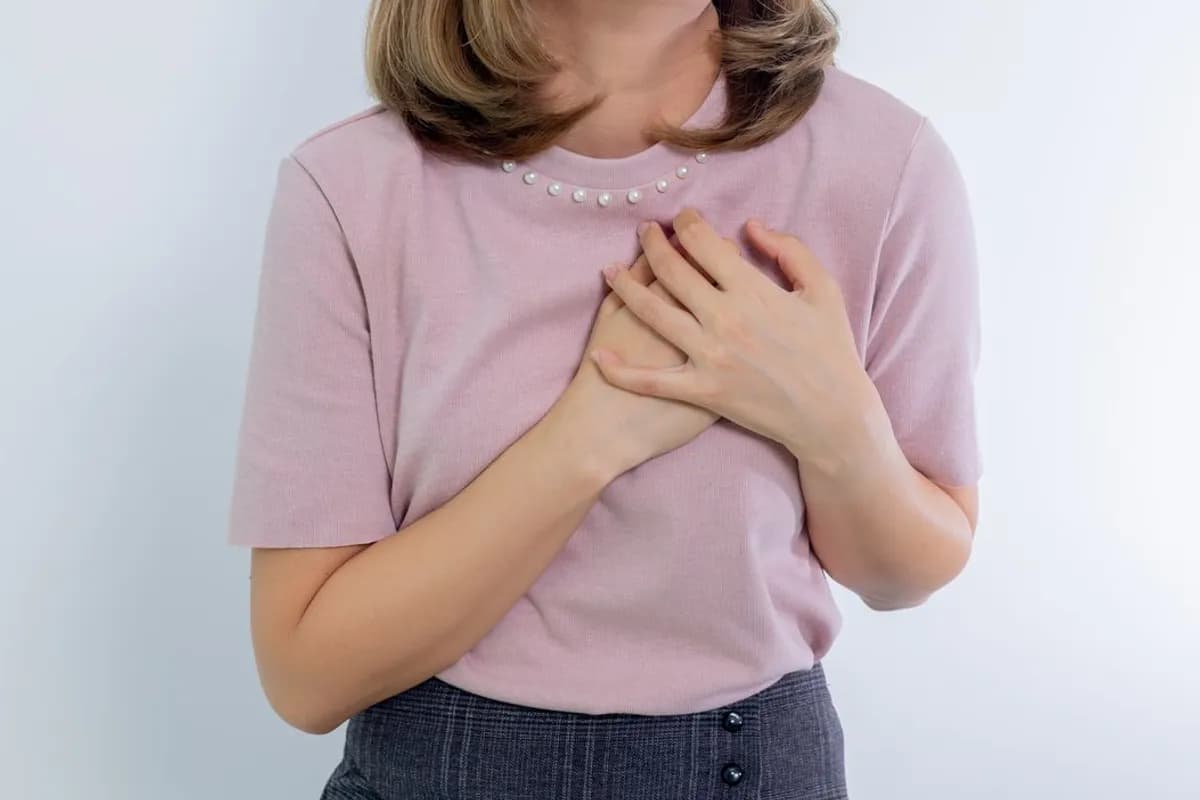
A patient once described her first panic attack to me this way: "I was standing in the grocery store, completely fine, and then my body decided I was dying." Another patient, in the same week, described "anxiety attacks" that built over an entire afternoon before a difficult family visit, hours of tight chest, racing thoughts, and dread. Both used the word "attack." They were describing two genuinely different experiences, and the difference matters, because it changes what helps.
If you have been searching "panic attack vs anxiety attack" at midnight trying to name what happened to you, this article is for you. I will walk through how clinicians actually distinguish the two, the heart attack question, which deserves a careful answer, not a dismissive one, what to do in the moment, and how treatment works when these episodes keep coming back.
As always: this is education, not a diagnosis. Only a clinician who knows your history and your health can tell you what you are experiencing. If our glossary is helpful for any of the terms here, it is there for exactly that reason.
First, a vocabulary note: only one of these is a clinical term
Here is something that surprises many patients. "Panic attack" is a precisely defined clinical event, a sudden surge of intense fear or discomfort that peaks within minutes, accompanied by a cluster of physical and cognitive symptoms. "Anxiety attack," on the other hand, appears in no diagnostic manual. It is an everyday phrase people use, quite reasonably, to describe an episode of intense anxiety.
That does not make anxiety attacks less real or less deserving of care. It just means that when you say "anxiety attack" to ten different people, you may mean ten different things, anything from a rough hour of worry to a full panic attack. Part of my job in an evaluation is translating your experience into clinical language, because the distinction guides treatment.
The key differences, side by side
The clearest way I know to explain the difference is to compare the two experiences point by point:
- Onset. A panic attack is abrupt, from calm (or even asleep) to full intensity within minutes, often with no obvious cause. Intense anxiety builds gradually, over hours or days, usually in response to something identifiable.
- Duration. A panic attack peaks fast and typically subsides within twenty to thirty minutes; the most intense phase is often shorter than ten. Severe anxiety can smolder for hours, days, or as long as the stressor lasts.
- Trigger. Panic attacks frequently arrive out of the blue, in the grocery store, driving, mid-meeting. Anxiety is usually tethered to something: a deadline, a health worry, a conflict, an upcoming event.
- Physical intensity. Panic is a full-body alarm, pounding heart, chest pain, shortness of breath, shaking, sweating, dizziness. Anxiety produces physical symptoms too, but usually at a lower volume: muscle tension, restlessness, stomach upset, fatigue.
- The thoughts involved. During panic, the fear is immediate and catastrophic: I am dying, I am losing my mind, I have to get out of here. During anxiety, the thoughts are future-facing: What if this goes wrong? What if I can't handle it?
- Afterward. A panic attack often leaves people drained and shaky, and, importantly, afraid of the next one. Anxiety tends to ebb when the stressor resolves, or grind on if it does not.
One more distinction I find useful in my practice: anxiety is your alarm system anticipating danger; panic is your alarm system firing as if the danger is already here. Same wiring, different mode.
Panic attack symptoms
During a panic attack, several of these arrive at once, suddenly, and peak within minutes:
- Racing or pounding heart, palpitations
- Chest pain or pressure
- Shortness of breath or a smothering feeling
- Trembling, sweating, chills, or hot flushes
- Dizziness or lightheadedness
- Nausea or stomach distress
- Numbness or tingling, often in the hands or face
- A feeling of unreality or detachment from yourself
- Fear of losing control, "going crazy," or dying
Some people also experience nocturnal panic attacks, waking abruptly from sleep in full alarm. These are real, recognized, and treatable, and they are not a sign that something is uniquely wrong with you.
"Am I having a heart attack?", take this question seriously
I want to handle this carefully, because the internet often does not.
Panic attacks and cardiac events can share symptoms: chest pain, a racing heart, shortness of breath, sweating, a sense of doom. Many people experience their first panic attack in an emergency room, convinced they are having a heart attack, and I never want a patient to feel foolish about that visit. It was the right call.
Here is my firm position as a clinician: new, unexplained chest pain should be evaluated medically, full stop. Do not diagnose yourself with panic in the moment, and do not let an article, including this one, talk you out of seeking emergency care. Chest pain with symptoms such as pain spreading to the arm, jaw, or back, or symptoms that persist and worsen rather than peaking and fading, needs immediate medical attention. Call 911.
The reassurance comes on the other side of that evaluation. Once a doctor has ruled out cardiac and other medical causes, thyroid problems and certain medications can also mimic panic, a pattern of sudden, short-lived episodes that peak within minutes and resolve on their own points toward panic. From there, the fact that panic attacks are intensely uncomfortable but not physically dangerous becomes genuinely useful information, because fear of the symptoms is precisely what fuels the cycle.
What to do during a panic attack
You cannot reason your way out of a panic attack mid-peak, but you can stop feeding it. These are the strategies I actually teach patients:
- Name it. Saying to yourself "this is a panic attack, it will peak and pass" sounds too simple to work. It works because it interrupts the catastrophic story, I am dying, that escalates the alarm.
- Lengthen your exhale. Breathe in slowly through your nose for about four counts, out through your mouth for about six. The long exhale engages the body's calming response. Avoid fast, deep gulps of air, which can worsen dizziness.
- Ground through your senses. The 5-4-3-2-1 technique: name five things you can see, four you can touch, three you can hear, two you can smell, one you can taste. It anchors attention in the present, outside the alarm.
- Don't flee if you can help it. Escaping the grocery store ends the attack faster, but it teaches your brain the store was the danger. Staying put while the wave passes, even sitting down right where you are, teaches the opposite lesson.
- Ride it, don't fight it. Resisting panic is like tensing against a cramp. The posture that helps most is closer to: alright, alarm system, do your thing, I'll be here when you're done.
For the slower burn of intense anxiety, the same breathing and grounding help, along with reducing caffeine, moving your body, and writing the worry down so it stops circling.
When it becomes panic disorder
A single panic attack does not equal a disorder, isolated panic attacks are common in the general population and can be triggered by stress, illness, stimulants, or nothing discernible at all.
Panic disorder is diagnosed when attacks recur unexpectedly and, crucially, when the fear of the next attack starts running your life: persistent worry about having another one, or changing your behavior to avoid situations where one might strike. That second part is the hinge. Many of my patients are less troubled by the attacks themselves than by the shrinking map of places they still feel safe.
A note on agoraphobia
When avoidance widens, no highways, no crowds, no lines, no leaving home without a trusted person, it may have become agoraphobia. Despite the name, agoraphobia is not really a fear of open spaces; it is a fear of being somewhere escape or help would be difficult if panic struck. It develops gradually and logically, one avoided place at a time, which is why early treatment of panic matters. It is far easier to keep the map from shrinking than to redraw it later, though redrawing it is absolutely possible, and I have watched patients do it.
How treatment works
Panic disorder and anxiety disorders are among the most treatable conditions I see, and treatment usually draws on two tools, often together.
Therapy. Cognitive behavioral therapy is the best-studied approach. It teaches you to catch and test the catastrophic interpretations that fuel panic, and, through gradual, structured exposure, including to the physical sensations themselves, retrains your alarm system to stop treating a racing heart as an emergency. Our psychotherapy services use these approaches, tailored to your history and pace.
Medication. For some patients, medication reduces the frequency and intensity of attacks enough for therapy to gain traction. Options include daily medications such as certain antidepressants, and in limited situations short-term medications, each with trade-offs your prescriber will walk through with you. There is no single right answer, timelines vary from person to person, and decisions like these belong in an ongoing medication management relationship, not a blog post.
Which brings me to a practical point: panic and anxiety are conditions that make leaving the house harder, which historically made getting to treatment harder. That barrier has largely fallen. We provide telepsychiatry across all of Maryland, with evening appointments from 6 to 10 pm daily, so care can begin from your living room, sometimes the only place a person with agoraphobia currently feels safe. Starting there is not cheating. It is starting.
Frequently asked questions
How long does a panic attack last?
Most panic attacks peak within about ten minutes and subside within twenty to thirty. If intense symptoms persist well beyond that without ebbing, it may be waves of anxiety with repeated surges, or something medical that deserves evaluation. Duration is one of the most useful clues a clinician uses.
Can a panic attack happen for no reason?
Yes. Unexpected, out-of-the-blue attacks are a hallmark of panic disorder, and they can even occur during sleep. That said, "no reason" often means "no visible reason", accumulated stress, poor sleep, caffeine, and illness can all lower the threshold without announcing themselves.
Is an anxiety attack a real diagnosis?
"Anxiety attack" is not a formal diagnostic term, but the experience it describes, an episode of intense, distressing anxiety, is entirely real and treatable. A clinician will help determine whether what you experienced was a panic attack, severe anxiety connected to a stressor, or part of an underlying anxiety disorder.
How do I know if it was a panic attack or a heart attack?
You often cannot know for certain in the moment, and you should not try to. New or unexplained chest pain warrants medical evaluation, call 911 if symptoms are severe or persistent. Once cardiac causes have been ruled out by a doctor, the pattern of sudden episodes that peak within minutes and pass on their own points toward panic, and that becomes something we can treat.
A note on urgent situations: this article and our practice are not an emergency service. If you or someone you love is in immediate crisis or having thoughts of self-harm or suicide, call or text 988 to reach the Suicide and Crisis Lifeline, or call 911 right away.
You do not have to white-knuckle this
Whether what you experienced was a panic attack, a wave of severe anxiety, or something you cannot yet name, the episode itself is information, and a treatable condition is a very different thing from a life sentence.
At Oasis of Hope Behavioral Healthcare, we evaluate and treat panic and anxiety in patients ages six and up, in person at our Waldorf, Maryland office and through telepsychiatry across all of Maryland, with evening telehealth hours from 6 to 10 pm daily. We accept most major insurance plans, including Medicaid and Medicare. Call 301-710-4218, and let's figure out together what your alarm system is trying to tell you.
Talking to someone helps.
If anything here resonates, a consultation is a low-pressure first step. In-person in Waldorf or by telepsychiatry across Maryland.